Jazz, Cultural Exchange, and the Sound Language of America: Brubeck’s Bossa Nova U.S.A.
By Jacob Slattery, May 2026
As the United States prepares for its 250th “birthday” in July 2026, the Dave Brubeck Quartet’s landmark 1963 Columbia Records album Bossa Nova U.S.A. offers a vivid reminder of the openness, curiosity, and cultural exchange that have long shaped American music. Released at the height of the bossa nova craze of the early 1960s, the album captures a moment when American musicians were looking outward for inspiration, embracing global influences and creating a new hemispheric sound language.
By 1963, the Dave Brubeck Quartet had already become one of the most recognizable groups in jazz. Their signature “cool” qualities that led them to commercial success merged naturally with the pulse and intrinsic emotional character of Brazilian music. Brubeck recognized that bossa nova was not simply a passing trend, but part of a larger musical conversation between nations. Rather than attempt strict authenticity, the “Classic” Quartet developed a sophisticated conversation between samba rhythms and contemporary jazz through its own sound.
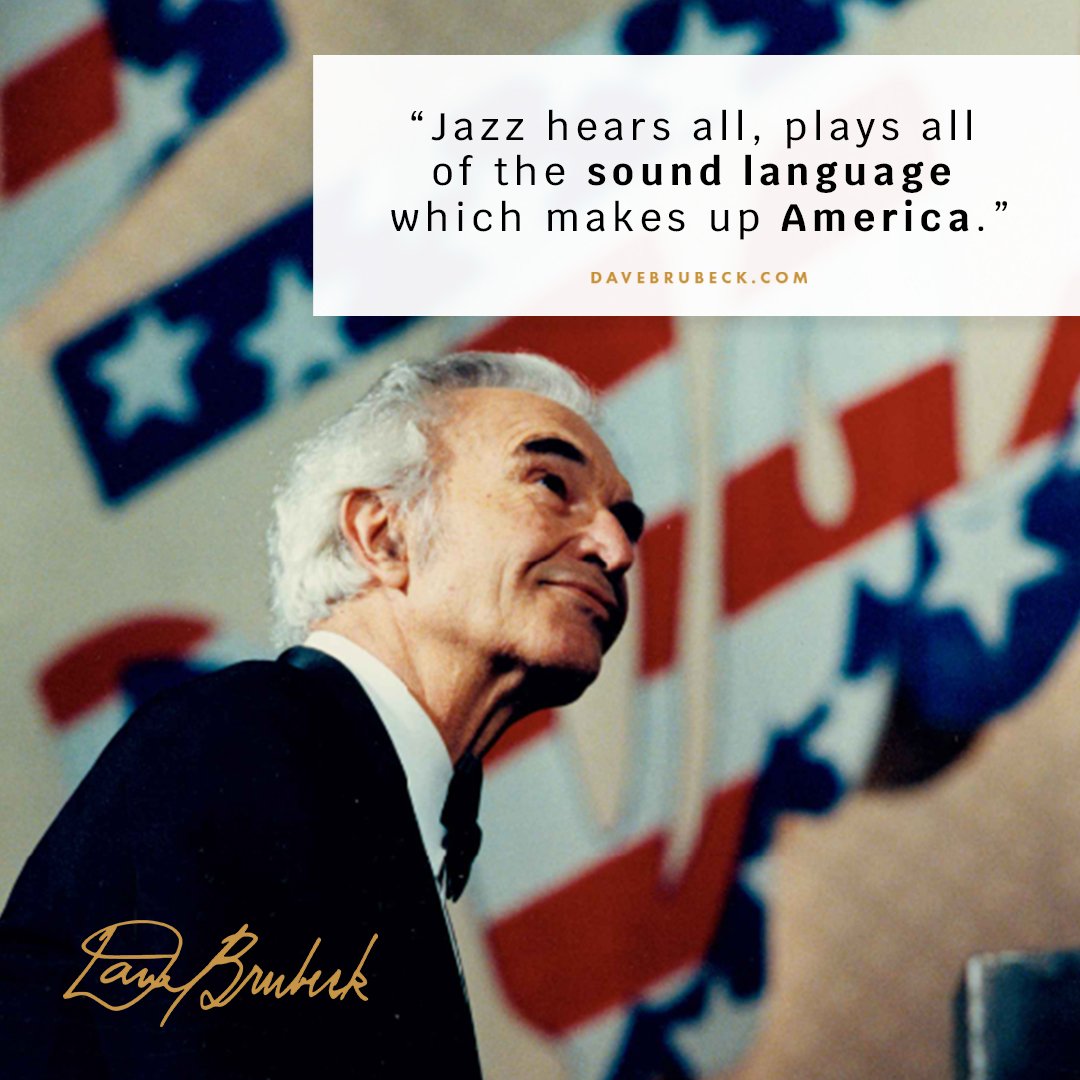
For Brubeck, the spirit of cultural exchange was central to jazz itself. In a 1951 article for DownBeat magazine, he firmly declared: “Jazz hears all, plays all of the sound language which makes up America.” He revisited this theme over a decade later in the liner notes for the Bossa Nova U.S.A., reflecting on how jazz had always evolved through a process of “cross-fertilization,” borrowing from African, Latin American, Asian, and European cultures while remaining rooted in improvisation and experimentation.
Brubeck frames this exchange as part of a larger historical process in which jazz and Brazilian music continuously absorb and transform one another. “They have borrowed from jazz and incorporated it with their native music,” he wrote. “We have borrowed from the result and incorporated it back in our native music—jazz.” More than sixty years since the album was released, Brubeck’s vision resonates more than ever, especially as we look back on the cultural influences that have shaped the United States since its inception.
“Jazz hears all, plays all of the sound language which makes up America.”
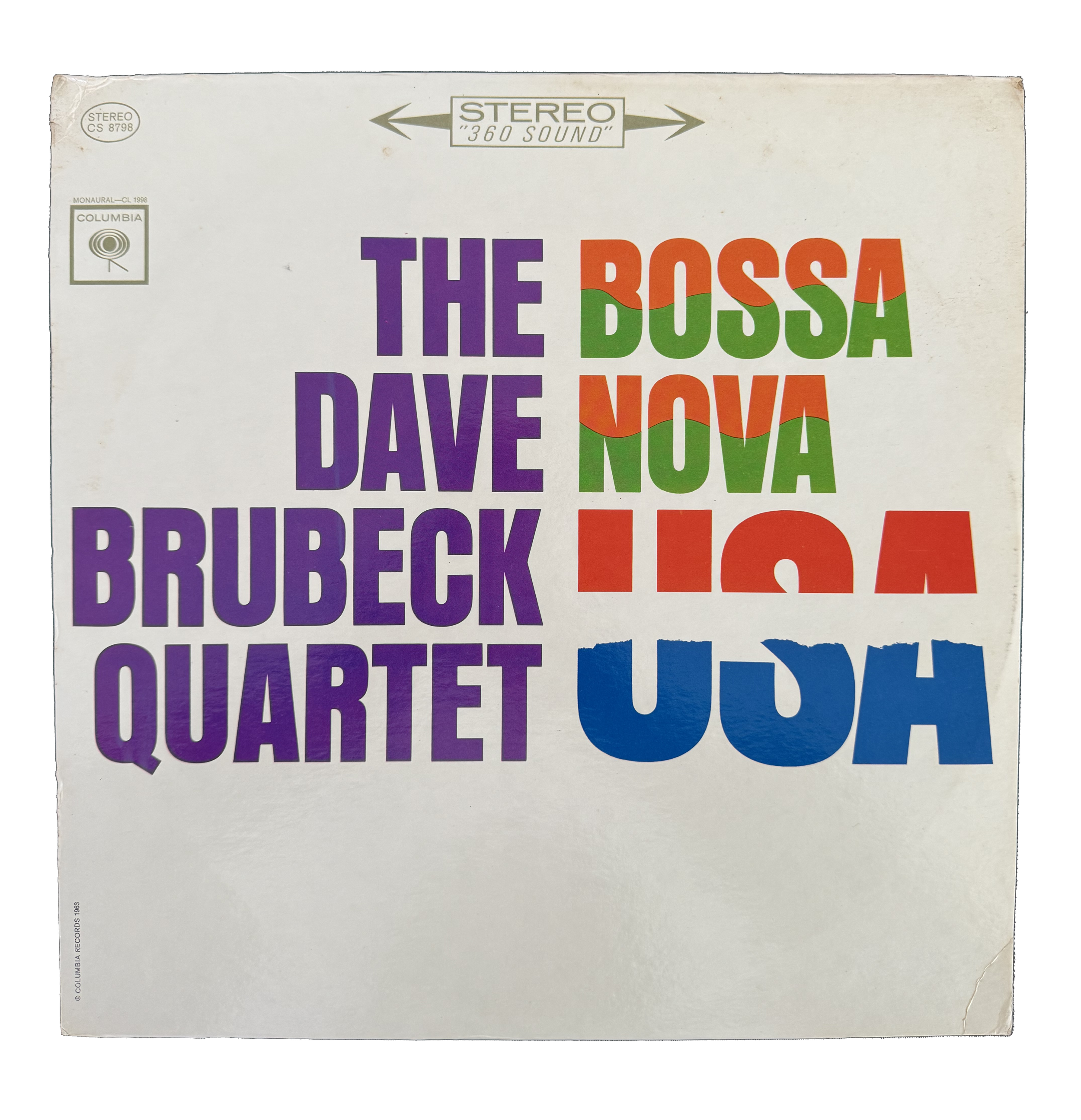
Bossa Nova U.S.A. unfolds like a guided tour through Brubeck’s philosophy of musical exchange. The album opens with its title track, “Bossa Nova U.S.A.,” which Brubeck described as an “orphan” tune that he wrote in 1955 while looking out over San Francisco Bay from a California hilltop. Columbia Records A&R producer Teo Macero encouraged the Quartet to reimagine the tune as a bossa nova single and gave it its title. Brubeck lovingly referred to it as “a ‘somewhat samba’ with a West Coast drawl.”
The second track, “Vento Fresco” (English: “Cool Wind”), was conceived specifically as a bossa nova, in which Brubeck sought the “cool, relaxed, low-key” statements of Brazilian song. “Trolley Song,” a long-time Quartet favorite, was recorded here in its a major record label debut and serves to showcase the South American rhythmic influence long embedded in jazz practice. On “Theme for June,” written by Howard Brubeck as part of his Dialogues for Jazz Combo and Orchestra, the Quartet engages another “far-reaching influence” in jazz: “the classical composer writing especially for jazz musicians.” Side I concludes with “Coração Sensível” (English: “Tender Heart”), composed by Teo Macero himself, who briefly introduced in the liner notes with characteristic understatement: “Thanks, Dave.”
Side II starts off with “Irmão Amigo” (“Brother Friend”), inspired by Brazilian youth culture in the coffee houses and on the beaches of Rio de Janeiro. This theme of the brotherhood of mankind is an especially prevalent arc that shows up throughout Brubeck’s career as a composer. It is followed by “There’ll Be No Tomorrow” as an homage to Chopin, whom Brubeck credits as influencing all jazz ballads. The result is a natural Brubeck-ian way of floating across genres. This Chopinesque tune can be found in his ballet Points on Jazz, a vocal interpretation by Carmen McCrae (with words by his wife Iola), and again in this version swung by Desmond.
Next up is “Cantiga Nova Swing” (English: “Swing a New Song”), an exploration of “parallel harmonic chord progressions often found in Spanish or south-of-the-border music,” followed by a meditative counterpoint, “Lamento” is an imaginative, meditative counterpoint on the poetic qualities of the Portuguese language. The album closes with Rodgers and Hart’s “This Can’t Be Love”, the only standard on the record reimagined through a bossa nova lens. Here, Brubeck reflects more broadly on the stylistic premise of the entire project, writing that “almost any jazz tune can be played with a bossa nova or quasi-bossa nova beat,” while acknowledging that “the authentic bossa nova will come from the Brazilian originators.”
Taken as a whole, Bossa Nova U.S.A. reveals the Dave Brubeck Quartet playfully experimenting with a fashionable musical style while articulating a broader worldview: jazz is a constantly evolving global language. As we continue to reflect on the past, present, and future of the United States, it is important to return to Brubeck’s notion that “it is this process of cross-fertilization that from the beginning has made jazz such a vigorous art form”, a form of what Louis Armstrong called “cultural exchange.”
Sources: Liner notes by Dave Brubeck, 1963, Bossa Nova U.S.A. (Columbia Records, 1963).