Glaser Designs Brubeck: 1960–1978

On October 18, 1969, The Dave Brubeck Quartet and the Count Basie Orchestra performed a concert at (the new) Lincoln Center's Philharmonic Hall, now David Geffen Hall. Tickets started at $3.50.
The concert's poster art, which distilled the era’s jazz energy into bold, fluid shapes and vibrant color, was conceived by legendary graphic designer Milton Glaser, who went on to design logos for I ❤️ NY, The Brooklyn Brewery, and DC Comics, among others. In 1968, Glaser co-founded New York Magazine with Clay Felker, and President Barack Obama awarded him with the National Medal of Arts in 2009.
This wasn’t Glaser’s first encounter with Brubeck’s world. The creative partnership between Brubeck and Glaser began nearly a decade earlier, uniting two innovators of modern American art for the first time.
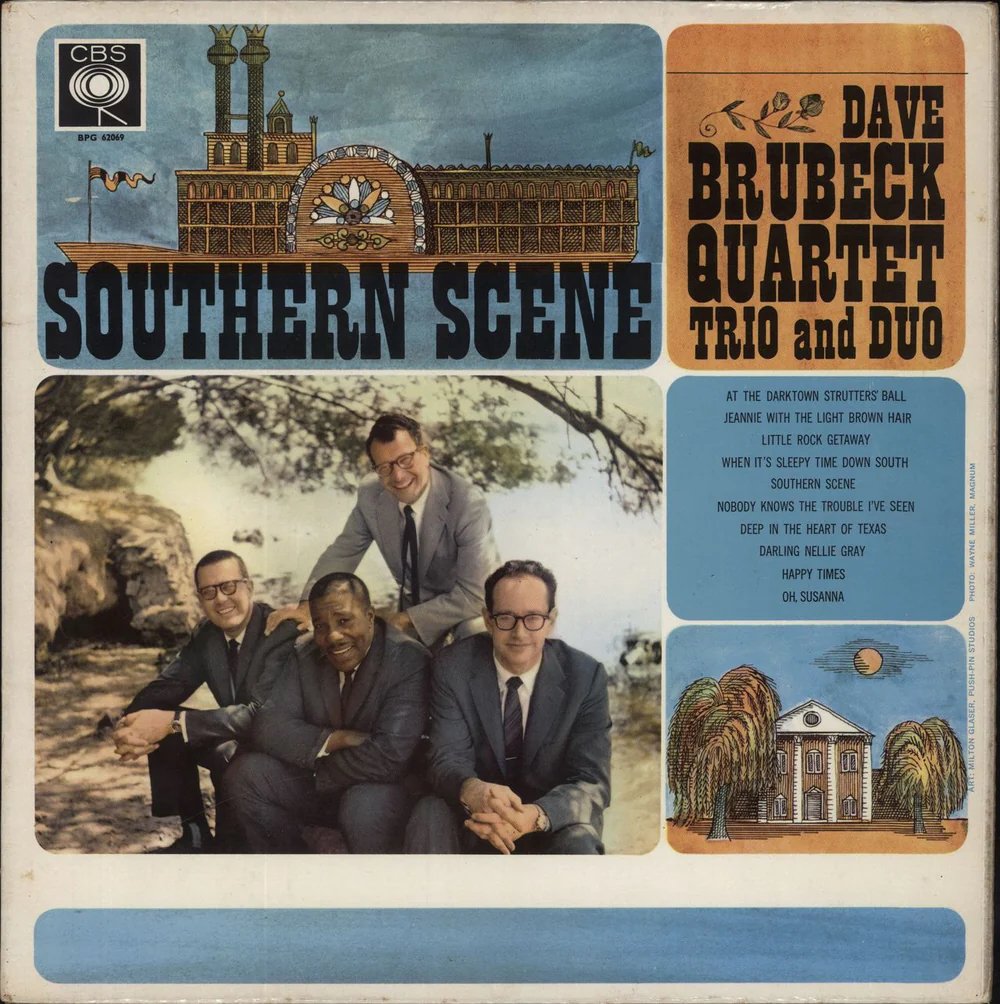
Dave and Glaser’s first collaboration can be traced back to 1960. Glaser—then a young co-founder of Push Pin Studios—designed an album cover for The Dave BrubeckQuartet (Trio and Duo) album Southern Scene (Columbia Records, 1960) that captured the Quartet’s boundary-pushing diversity and modernist edge. In January of that year, Dave famously canceled a 25-date concert tour of Southern colleges and universities after calls to replace Black bassist, Eugene Wright, who is featured on prominently on the album, front and center.
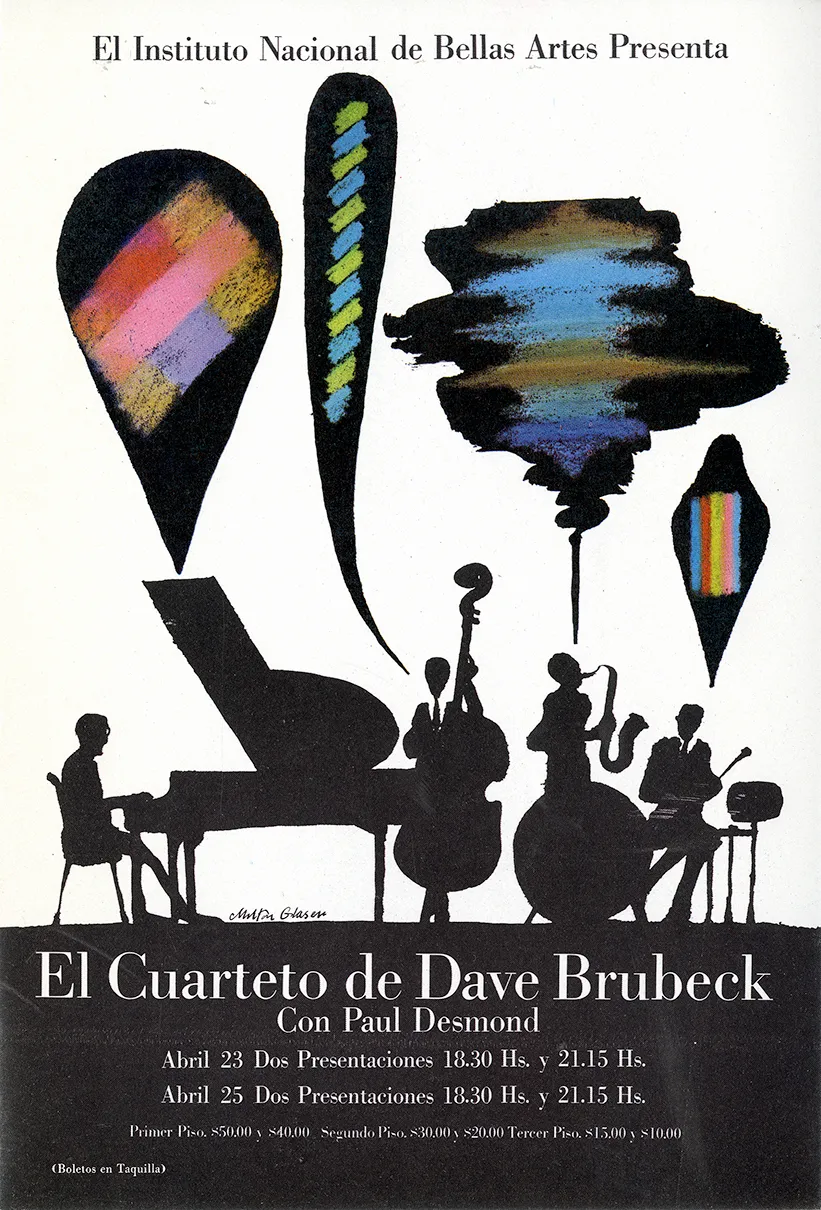
A few years later, in April 1964, Glaser designed a flyer for the Quartet’s performances at the Instituto Nacional de Bellas Artes (INBAL) in Mexico City. Milton Glaser archivist Beth Kleber wrote: “Glaser’s trademark blotchy ink figures get a more refined treatment here, and as always, he somehow translates the ineffable qualities of music into art.”
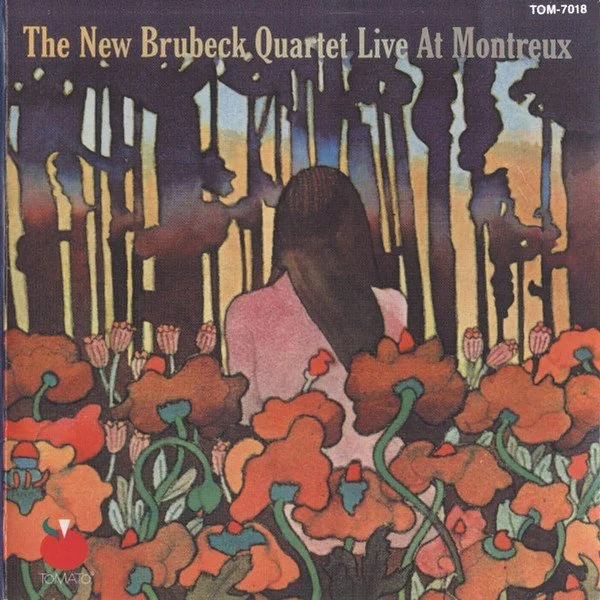
Over two decades since their first collaboration, Glaser and Brubeck reunited once more for the vivid cover of The New Brubeck Quartet Live at Montreux (1978).
Across these projects, Glaser’s art translated Brubeck’s music into a visual rhythm, bridging the worlds of modern jazz and modern design and leaving us with an enduring record of mid-century creativity.